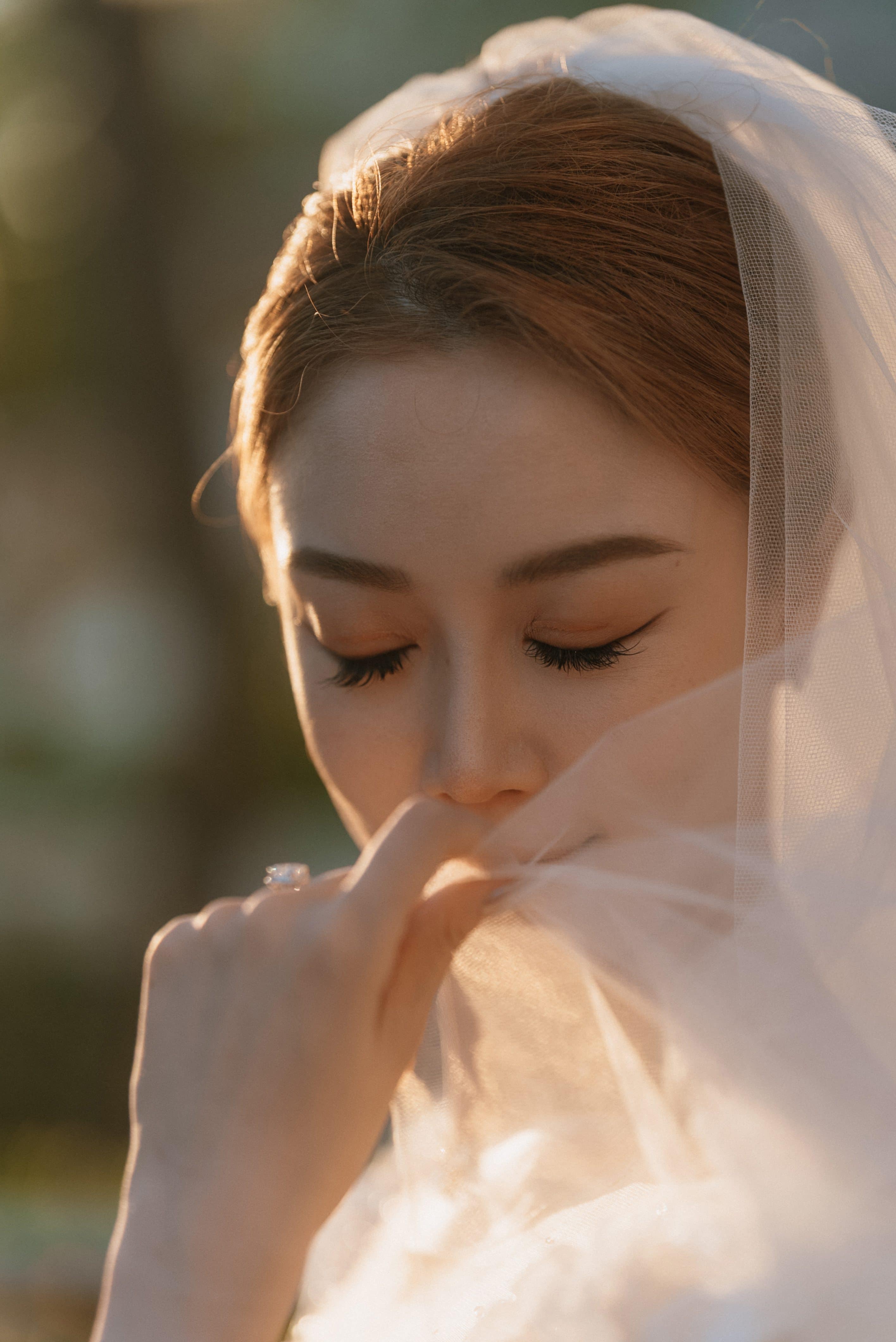
Getting Married in Bali: The Complete Guide for Foreign Couples
Bali has quietly become one of the world's favourite places to say "I do" — and for good reason. Within a short drive you can find clifftops above the Indian Ocean, jungle valleys wrapped in rice terraces, and beach clubs made for sunset celebrations. But marrying abroad raises practical questions that a hometown wedding never does: is it legal, how do you choose a region, what does it cost, and when should you go? This complete guide walks foreign couples through the whole picture, from the big decisions down to your first few concrete steps.
Why get married in Bali
Couples travel from Australia, Singapore, the UK, the US and far beyond because Bali offers something a ballroom at home rarely can: a genuinely cinematic setting wrapped inside a holiday your guests will never forget. The island is compact, the vendor community is experienced with international weddings, and for many couples the budget stretches further than it would back home. It is a destination wedding that often feels more like a multi-day experience than a single event.
Legal vs symbolic ceremonies
The first decision to make is what kind of ceremony you want. Broadly, couples choose between a legally binding ceremony in Indonesia and a symbolic ceremony, and the right answer depends on your priorities and how much paperwork you want to manage from abroad.
Legal ceremonies
A legal ceremony makes your marriage officially recognised in Indonesia, which typically involves more documentation and lead time than a symbolic one. The requirements can differ depending on your nationality, religion and personal circumstances, and they do change over time. Rather than following generic checklists online, the safest path is to work with a licensed local wedding planner or an official celebrant who handles legal Bali weddings — they will confirm exactly what applies to your situation and manage the process correctly.
Symbolic ceremonies
A symbolic ceremony is not legally binding but is otherwise a full, beautiful wedding — vows, an officiant, and all the emotion of the day, with far less paperwork. Many international couples complete the legal formalities quietly at home (before or after the trip) and treat Bali as the celebration itself. This keeps logistics simple and lets you focus on the experience. A local planner can advise on which approach suits you best.
The general planning process
Once you know the type of ceremony you want, planning a Bali wedding tends to follow a familiar rhythm. A rough order of operations looks like this:
- Set your priorities and a realistic budget, and decide roughly how many guests you'll invite.
- Choose a region that matches the atmosphere you want, then shortlist venues within it.
- Engage a licensed local wedding planner — invaluable for logistics, vendors and any legal paperwork.
- Lock in your key creative vendors early, especially photography and film, which book out fastest.
- Build the day's timeline around light, sunset and your venue's rhythm.
- Handle guest logistics: accommodation, transport and a welcome plan for people travelling far.
Choosing your region and venue
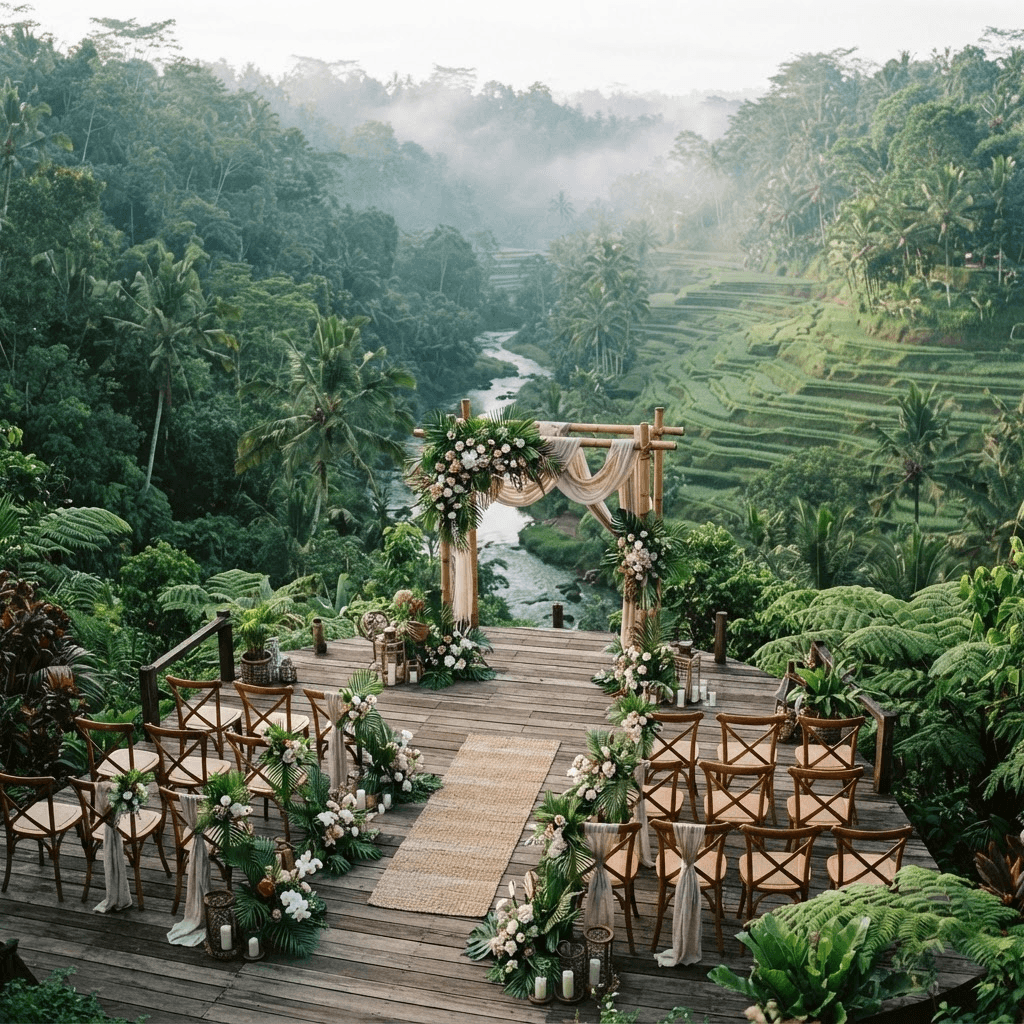
Bali's magic is its variety, and each region has a distinct personality. Uluwatu and the Bukit Peninsula are the home of dramatic clifftop, ocean-sunset ceremonies. Ubud, the island's cultural heart, offers jungle, rice terraces and serene, green backdrops. Canggu and Seminyak on the west coast are beach-club territory, relaxed and party-forward. And Nusa Penida, a short boat ride away, delivers raw, cliff-edge scenery that suits adventurous couples and elopements.
Beyond region, your venue type shapes the whole day: a private villa is flexible and can double as accommodation, a resort is the easiest to coordinate under one roof, and a beach club brings unbeatable sunset atmosphere. For a deeper comparison of areas and venue types, see our dedicated venues guide.
Rough budget ranges
Costs vary enormously with guest count, venue and season, so treat the following as general market estimates rather than quotes. An intimate elopement often lands somewhere around $3,000–$8,000 all-in, a mid-size full-day wedding commonly falls in the $10,000–$25,000 range, and a luxury private-villa wedding starts around $30,000 and climbs from there. Guest count is the single biggest lever on the total. Our full cost breakdown goes line by line if you want to plan the numbers in detail.
Best time of year
Bali's dry season runs roughly from May to September and is the most popular window — reliably sunny, but also the busiest, with venues and top vendors booking out far ahead. The wetter months bring lush greenery (especially in the Ubud highlands) and can be gentler on both crowds and budget, at the cost of a higher chance of rain. Whenever you marry, golden hour around sunset is the most magical time for the ceremony and portraits.
Your next steps
If Bali feels right, start by deciding what matters most to you — the setting, the guest experience, or the way the day is captured — and let that shape everything else. From there, choose a region, engage a trusted local planner for the ground logistics and any legal steps, and secure your creative team early. The rest of the day tends to fall into place once those foundations are set.
Planning your Bali wedding?
See our photo & film collections and check your date — we reply within 24 hours, usually faster.